

Disclosure Day (2026)
Film Review

Sharks. Dinosaurs. Peter Pan. Schindler. For the last six decades, Steven Spielberg has been bringing creatures, fairy tales, and historical figures to life. But there is one creature that Spielberg keeps coming back to.
Aliens.
Whether it be music-loving aliens from Close Encounters of the Third Kind, lovable friendly aliens from E.T., killer aliens from War of the Worlds, or… whatever kind of aliens were in Indiana Jones and the Kingdom of the Crystal Skull, Spielberg has never really been done looking up at the sky and asking what might be looking back.
Which brings us to Disclosure Day, Spielberg’s latest return to alien territory, and a movie I left feeling deeply unsure about. Not angry. Not bored, exactly. Not even disappointed in the way where you know exactly what went wrong. For me, I think I was just really really underwhelmed.
I walked out thinking, “Maybe I missed it.” Maybe there was some bigger emotional or spiritual point that hadn’t settled yet, or maybe this was one of those movies that needed a few hours to unpack itself, or maybe I would wake up the next morning and realize the magic had been there the whole time, quietly expanding in the way Spielbergian magic often does as you think more about the story later.
Twelve hours later, I’m still mostly just underwhelmed.
That is not going to be everyone’s reaction. A lot of people are responding strongly to this movie, and I get why. It has that unmistakable Spielberg visual language where light pours through windows, it’s handsomely made for sure. There are moments where the camera movement, framing, and sense of awe remind you that Spielberg still has one of the best directorial eyes in film history.
But for me, Disclosure Day feels like a very expensive, very polished re-tread of Close Encounters of the Third Kind, updated for the age of conspiracy theories, viral footage, institutional distrust, and “what if this is AI?” paranoia (which is quickly discounted with such ridiculous technobabble that would make Gene Roddenberry blush).
And the problem is not that Spielberg is returning to old themes (great artists do that all the time). The problem is that Disclosure Day doesn’t seem to find much new inside those themes. The film is not really an action movie (although it occasionally does tries to be one.) There are chases and escapes and big moments of danger, but many of them feel less like essential story beats and more like runtime scaffolding. A character crashes into a house to rescue someone, only for the escape to hinge on another absurdly convenient accidental car flipping. It happens more than once: the heroes are cornered, the film needs them not to be, and then improbable solutions, or just pure incompetence, arrives to solve the problem.
That is not tension. That’s a term I’d like to coin called, “narrative roadside assistance”.
The thing is, that’s it’s not really a mystery either. To be fair, I don’t think the film is trying to be an Aggie whodunnit, but it does behave at times like its revelations are supposed to hit harder than they do. The movie wants the audience to feel the pieces clicking into place, but the broad shape of the story is visible from a long way off. If you have seen Close Encounters, or really any number of alien visitor/conspiracy cover-up stories, you are going to recognize the road almost immediately. Painfully immediately.
That leaves the movie’s bigger idea: faith.
Or is it about belief? Or miracles? Or maybe aliens as a replacement for God. Or aliens as evidence of God. Or aliens as proof that faith collapses when miracle becomes documented? Or maybe humanity just needs something bigger than itself to look at in wonder. I’m honestly not sure, and I do not think the movie is either — which is clear by the mess of a paragraph this has led me to!
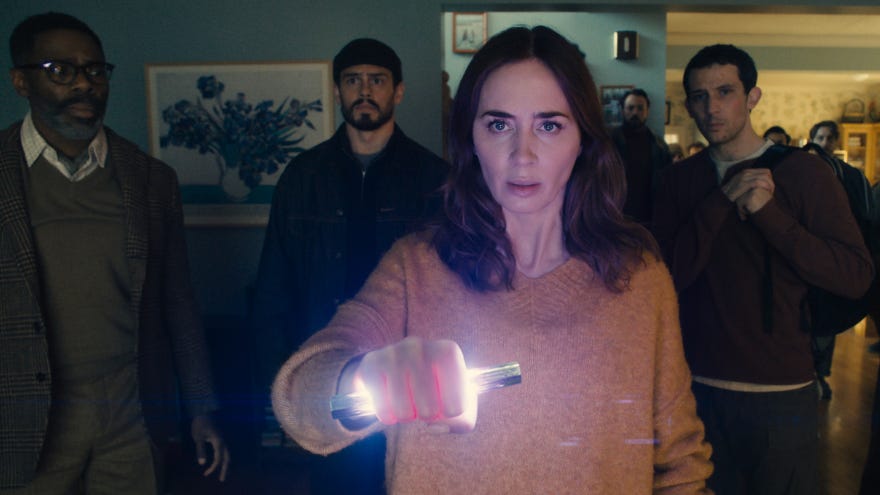
There is clearly an attempt here to say something about what people believe, what they need to believe, and what happens when the impossible becomes visible. That is a fascinating idea for a science fiction movie, especially right now. We live in a world where every image is suspect, every institution is doubted, every revelation is immediately filtered through politics, technology, media, and tribal loyalty. A movie about the world being confronted with undeniable alien contact should have a lot to say, but Disclosure Day keeps circling the question without really landing on an answer.
At times, it seems to be asking whether faith can survive proof. At other times, it seems to be asking whether proof can create a new kind of faith. Then it sort of gestures toward religion, science, spirituality, and mass media, but never seems willing to fully risk saying the thing it wants to say. It dances around big ideas without putting its full weight on any of them.
I’m not going to spend forever talking about that point, especially because I feel like it missed the mark. And I could forgive that touchy topic not landing if the emotional core worked better for me. Listen, Emily Blunt was really good in this film. She absolutely deserves her first billing and she holds the movie together as much as any performer could. When the story is focused on her, it has a purpose, she gives the story an intelligence and groundedness that keeps it from floating off into pure spectacle. But even she cannot quite make the movie emotionally catch fire.
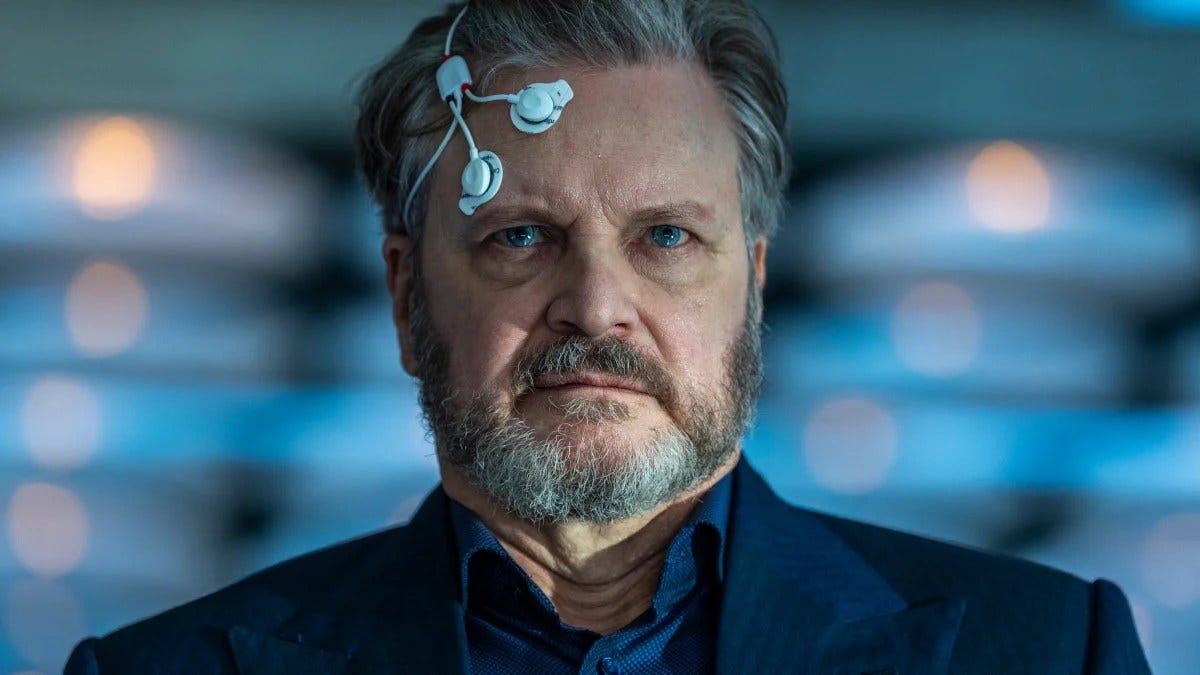
Colin Firth, who I really wanted to like in this, is strangely bland. His character, Noah Scanlon, seems meant to be a corporate or institutional villain with cracks underneath — powerful, compromised, maybe even broken. Instead, he mostly comes across as incompetent, and he’s not frightening enough to be a true monster, nor is he wounded enough to be tragic (to be clear they do attempt to include a wounding reason, but it lands so flat). Weirdly too, his character isn’t even sharp enough to be interesting, which I really thought at the outset he would be. Instead, he’s just sort of there, moving pieces around while the screenwriter keeps telling us he matters, but it just never develops.
Colman Domingo’s Hugo is also a sticking point for me. The story clearly wants Hugo to carry a moral or emotional authority, to function as one of the film’s “good” centers, but the character is not strong enough on the page to do that. Domingo is an excellent actor, but the movie asks us to feel a weight around Hugo that he has not earned.
And then there are the aliens themselves. Without getting into spoilers, the movie’s alien presence did not fill me with wonder. In fact, the more I thought about what had happened to certain characters — specifically children — the less enchanted I felt. These children’s lives were altered, damaged, and shaped by forces they did not understand and could not consent to. They were stalked, harmed, emotionally scarred, and then later used for someone else’s purpose.
The movie seems to want awe. As a father with children nearing the age of the kids in the movie, I felt suspicion. And anger.
And that may be my biggest disconnect with Disclosure Day. Spielberg has often been interested in alien contact as a source of wonder, terror, or transcendence. In Close Encounters, the pull toward the unknown is strange and obsessive, but it still feels like reaching toward something grand. Here, the aliens feel less like mysterious visitors and more like cosmic manipulators with very bad boundaries. We’re told its benevolence, but in my book abduction and imprisonment of children that end with assault is not benevolent — just ask Randy Quaid.
So, ultimately, Noah Scanlon may be corrupt, and the human systems of secrecy and control may be rotten. But the aliens do not exactly come out looking noble either.
The movie also has a surprising amount of visual polish rubbing up against some rough digital choices. For a major Hollywood release with Spielberg’s name and this kind of budget behind it, some of the CG work feels distractingly uncannily valley. There are animals and other visual elements that never quite convince the eye. It’s not enough to derail the movie, but enough to make you aware of the machinery. In a film that is so dependent on wonder, that kinda breaks hard.
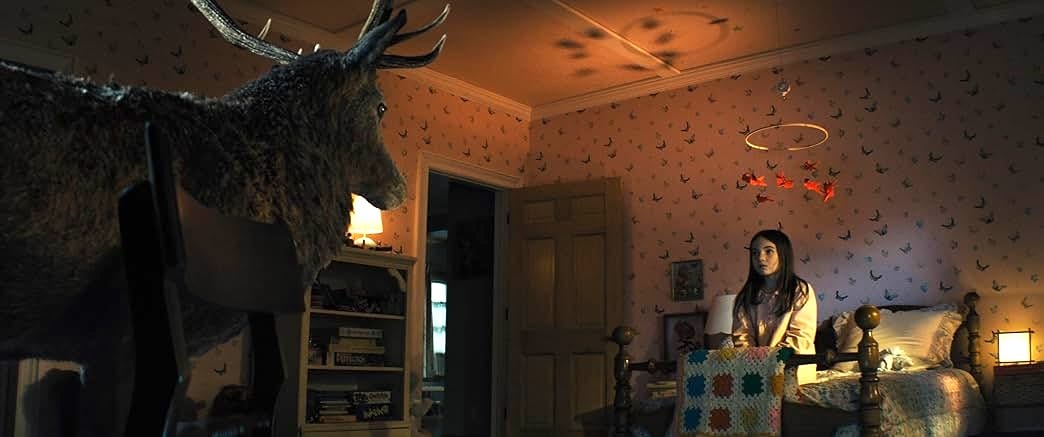


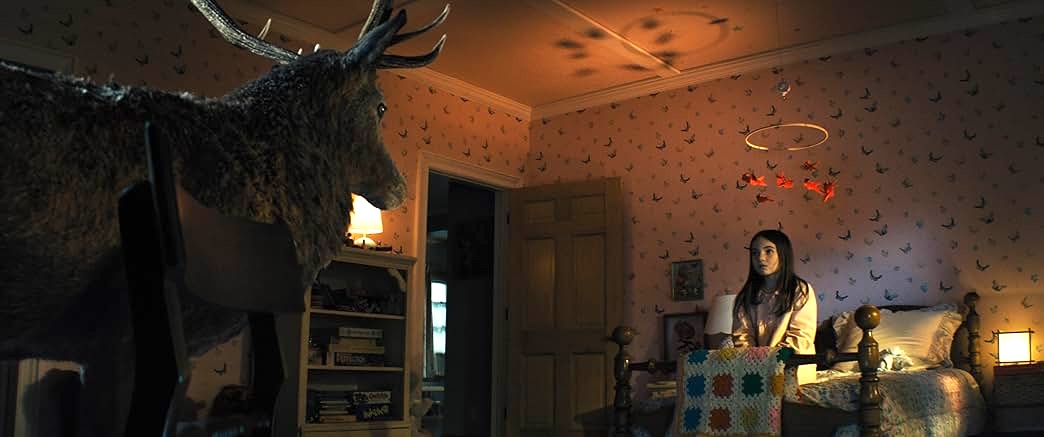
To be clear, Disclosure Day is not a bad movie. It is too well directed to be bad, and Spielberg can still compose an image better than almost anyone. There are shots here that remind you why his name carries the weight it does. The film has scale, atmosphere, and confidence. It looks like a real movie in an era when too many blockbusters look like expensive YouTube videos. But story-wise, I kept waiting for it to become something more than familiar.
The closest the film gets to feeling current is its brief engagement with artificial intelligence (and let me tell you it was so brief, it was almost throw away) and the question of whether any miraculous image can still be trusted (this is what the movie should have been about, in my opinion). That is a genuinely modern anxiety, and for a moment I thought the movie might dig into it. Instead, the issue is waved away with some “true pixels” technobabble, and then we are back in more familiar alien disclosure territory.
That is the frustrating thing. Disclosure Day has the pieces for a great modern UFO movie: government secrecy, mass belief, digital doubt, spiritual hunger, institutional decay, and humanity’s desperate need to know whether we are alone. But instead of combining those pieces into something new, it mostly rearranges furniture in a house (editors, it’s a joke, they build a house in the movie) Spielberg already built nearly fifty years ago.
Maybe that is enough for some viewers, honestly, it may be enough for most viewers. And, if you are hungry for a big, sincere, old-school Spielberg sci-fi movie, there is a good chance this will work better for you than it did for me. I respect that. I can see the version of this review someone else writes where they call the movie stirring, thoughtful, and full of wonder. I just did not feel that wonder.
I went into Disclosure Day not expecting much, and in the end, I got about what I expected. An expertly directed, unevenly written, thematically muddy alien movie that wants to be profound but too often settles for familiar.
It may look new, but story-wise, it feels like a re-treaded semi-truck tire: cleaned up, reinforced, and rolled back onto the road.
Still moving.
Just not going anywhere I haven’t already been.
More like, “Disappointment Day”…I sat through 30 minutes of trailers better than the movie. And why was some random English guy embedded with a top American organization? How come everyone shoots worse than a Stormtrooper? And why the hell didn’t she have a knife to spread her butter!
I just read the plot on the wikipedia page. (After this review, I wasn't going to watch it anyway.)
Between that and the review itself, C seems very generous.